

Industry: Industry Building
Application: Fans Extract
Challenge:
 Dyson vacuum cleaner prototypes are put through their paces with a battery of tests that include their ability to remove dust from surfaces. The dust produced for these tests needs to eventually be extracted to maintain a safe and healthy atmosphere. It is extracted from several test points by a motor-driven fan.
Originally switched direct-on-line (DOL) via a star-delta arrangement, this motor drew a large starting current that was causing fuses to blow regularly. Andrew Stokes, Integration Team Leader at the test facility, says: “Blown fuses were causing significant downtime. We also then had a failure of the dust extraction motor, which prompted us to look into soft starting as a better way of switching in the motor”. The maintenance team contacted ABB Drive Alliance member APDS for a solution.
APDS Solution:
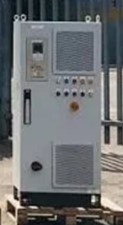 A 55kW ABB ACS550 variable speed drive was suggested and installed. Adding a pressure sensor to the controls via the Drive, allows the process to determine the flow rate needed and the drive changes the fan speed instantaneously to match this demand.
APDS looked at the existing set up, monitoring its power use over a week in January. The results showed that the 55kW dust extraction motor cost £284 per week to run at 12p per kWh. APDS fitted a 55 kW ABB standard drive as a trial. A pressure sensor was installed in the ducting near to the drive to measure the vacuum pressure in the system, which is used to determine the flow rate needed. Test stations can either be in operation or idle, causing the demand for extraction to vary, so the drive changes the fan speed instantaneously to match this demand. Using its internal PID function, the drive can still provide suction when the dust filters begin to clog up. As the filters become clogged the pressure feedback drops.
To compensate the drive speeds up the dust extraction motor maintaining the required suction. With the trial drive installed, monitoring showed that electricity costs per week could be reduced to £163 by running the motor at 40 Hz rather than 50Hz, giving a total annual saving of £6292. Another major benefit was the noise reduction – running the drive at 40Hz brought ambient noise level down to 85dB from a peak of around 90dB. Stokes added: “We got good support from James Chalmers, ABB and Alan Jones of APDS from the beginning. The demonstration was useful in that we could see the energy savings and could satisfy ourselves that the reduced speed would not lead to degradation in air quality. They also helped us setting up the pressure sensor and finding the correct set point to give the best operation.”
Benefits:
- Annual energy cost saving of over £6,000
In 2024, this equates to a massive £12,500 @0.25/kWhr - Reduced noise in the test area so safe levels
Conclusion:
To compensate the drive speeds up the dust extraction motor maintaining the required suction. With the trial drive installed, monitoring showed that electricity costs per week could be reduced to £163 by running the motor at 40 Hz rather than 50Hz, giving a total annual saving of £6292. Another major benefit was the noise reduction – running the drive at 40Hz brought ambient noise level down to 85dB from a peak of around 90dB. Stokes added: “We got good support from James Chalmers, ABB and Alan Jones of APDS from the beginning. The demonstration was useful in that we could see the energy savings and could satisfy ourselves that the reduced speed would not lead to degradation in air quality. They also helped us setting up the pressure sensor and finding the correct set point to give the best operation.”
Footnote:
Please note these customer-approved stories are collected since 2000. While some company names may have changed during this time, the principles and methods described to save energy or improve productivity are applicable today. contact APDS Ltd Bristol: 01179 822 049 www.apds.co.uk
Have a similar project or application? Why not contact us to discuss your needs?